Incredibly, the Formula 1 circus, usually synonymous with speed on the asphalt, is turning to rail. DHL recently transported 50 containers of racing equipment over 2,000 km from Florida to Montreal (Canada) by rail – including 46 forty-foot and four twenty-foot containers. However, this isn't quite as new as the pilot project is portraying it.
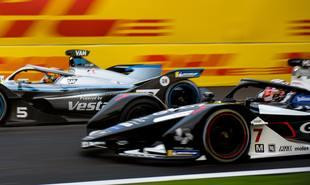 Formula 1
The modal shift was explicitly staged as a pilot project because it aims to further reduce the emissions-intensive dependence on air and road transport. It can be assumed that there had been consideration for some time about how – in addition to the electric Formula 1 – a further measure could be taken to reduce climate-damaging emissions, given the CO2-intensive powerhouse cars.
From Miami to Montreal
According to DHL, not quite 100 percent of the racing circus's equipment was transported by rail, but rather – albeit still – 68% of the usual Formula 1 freight volume for this section of the route, which would otherwise have been transported by road. All 50 containers were successfully delivered and moved by rail over the nearly 2000 km as part of the multimodal solution.
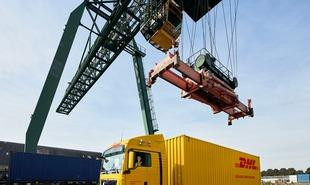 2000 km rail transport
The DHL Group has thus completed a milestone pilot project in North America. “The integration of rail into our logistics mix demonstrates how established modes of transport can be used in new ways to promote sustainability in a highly time-sensitive environment”says Paul Fowler, Head of Global Motorsports Logistics at DHL. “The successful delivery of all freight in this pilot project proves that rail can reliably meet Formula 1’s demanding schedule while simultaneously contributing to emissions reduction. DHL and Formula 1 are continuously developing their logistics solutions to further reduce the racing series’ environmental footprint.”
Long-time partners
Throughout the entire transport process, the containers were equipped with tracking devices and vibration sensors to monitor handling, transit times, and the integrity of the cargo, thus ensuring the safe and timely delivery of the racing equipment. The data collected will now be used to evaluate key operational criteria and sustainability performance, while DHL and Formula 1 explore further opportunities to reduce greenhouse gas emissions in the racing series.
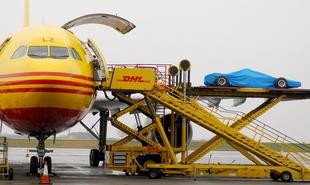 Also via air cargo as early as 2007. All photos: DHL Group
Across the entire Formula 1 calendar, Sustainable Aviation Fuels (SAF) are already being used for selected air freight shipments via book-and-claim mechanisms, resulting in up to 80% lower greenhouse gas emissions compared to conventional kerosene. In Europe itself, more than 50 trucks powered by biofuels are already supporting road transport, achieving an average reduction in greenhouse gas emissions of 83% compared to conventional diesel trucks.
Further expand modality
The rail pilot project between Miami and Montreal demonstrates the potential of rail as part of Formula 1's logistics network and forms the basis for future expansion. DHLand Formula 1,it states, arejointly exploring options to further expand the use of rail in North America from the 2027 season onwards, depending on the structure of the race calendar, operational feasibility, and the results of the 2026test.