Back in the summer of 2025, Jungheinrich had already announced its intention to close production at the Lüneburg port by the end of 2027.Employees there had been on strike since November 20th. After more than 80 days of intensive negotiations, IG Metall, the works council, and Jungheinrich finally reached an agreement.

The company's stated goal had been to retain 100 jobs in the region. A total of around 380 people work for Jungheinrich at its site just outside Hamburg. On Friday, February 13, these discussions culminated in the signing of socially responsible agreements that took the interests of long-term employees into account. According to company statements, the agreement includes a reconciliation of interests, a social plan, and a collective bargaining agreement.
The agreements include rules on severance payments and the establishment of a transfer company. This company is intended to help the affected employees find new career prospects in the job market over the next two years through training, coaching, and job placement.
Negotiations at the highest level
The forklift manufacturer stated that with this contract signing, a long-standing conflict had been brought under control.
Since then, the administration, economic development agencies, and politicians have been advocating for the location and the employees. Lüneburg's mayor, Claudia Kalisch, involved Lower Saxony's Minister-President right from the start.
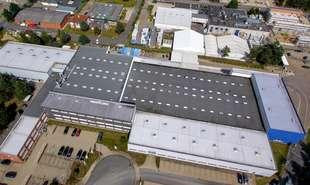 Factory in Lüneburg
As a result, at least more than a third of the jobs will remain in the region. The company management had also assured Lüneburg's mayor of this shortly before Christmas. Kalisch reported to the council: "We have succeeded in ensuring that 140 jobs will remain directly in the Hanseatic city of Lüneburg. We are relying on this statement."
The Hanseatic city is in contact with the company regarding the search for a new site. It is important "that all parties involved sit down together and talk to each other"To increase pressure and show solidarity with the employees, the council unanimously (with four abstentions) passed a resolution in a meeting to preserve the Jungheinrich location.
Design department received
The plant for special-purpose vehicles was newly built in 1989. In 1989, Jungheinrich invested a low double-digit million euro sum in the production facility. In 2024, the globally operating forklift manufacturer achieved a profit of 289 million euros on sales of 5.4 billion euros, as the North German Broadcasting Corporation (NDR) noted a few days ago. However, this was 3.3 percent less than the previous year, and, according to a dispute between the owners, which the "Manager"suggested as the underlying cause in a recent issue, "not enough return"as the IG Metall union also criticized.
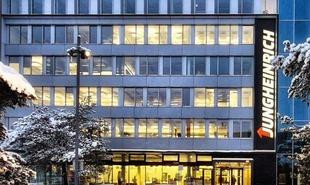 Headquarters in Hamburg. Photos: Jungheinrich
According to reports, around 160 employees will lose their jobs by 2027. Approximately 120 office jobs in the design department are to be retained in Lüneburg. Currently, the Lüneburg plant manufactures special and small-batch production runs according to specific customer requirements – for example, pallet trucks for particularly confined storage areas or for very heavy loads. According to the union, the production workers had been on an indefinite strike since November 20th.
The group plans to present its results for the 2025 financial year at the end of March.