to the absolute also, due to optimization pushed in part to AI, score points with their adaptability. Because "too much" efficiency can also block change, says Ben Schulz.
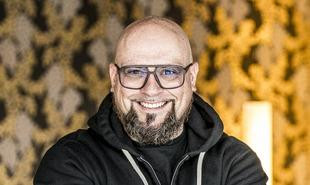 B. Schulz
Schulz, managing director of a consulting firm founded in 2001 with a team of ten employees and based in Dillenburg-Frohnhausen, Germany, even goes so far as to claim that an overly rigid framework of regulations actually sabotages change. A typically German phenomenon, which is otherwise considered one of the success factors of precision-driven export quality?
According to Schulz, German industry is investing billions in efficiency programs, automation, and cost reduction, while simultaneously losing its ability to act. "Efficiency programs solve operational problems," says Schulz, "but they create others. Anyone who believes that transformation can be managed through key performance indicators and control is blocking change." This would be akin to "overdriving" a stereo system or audio technology .
Schulz, however, is referring more to a deficiency in corporate culture. "Energy prices, supply chain risks, location debates, and a shortage of skilled workers," he says, "are colliding with management practices that originate from a stable world." Many industrial companies are reacting with more reporting, stricter guidelines, and additional controls. "That's understandable. And at the same time, fatal," says Schulz. "In uncertain times, control acts like a brake." In many companies, management is strongly technology- and process-oriented. Precision, cycle time, and quality are paramount. But as soon as change becomes a constant task, the system collapses.
The problem of oversteer
“Employees experience transformation as a loss of influence,” says Schulz. The more management tries to compensate for this with numbers, the greater the sense of disengagement becomes. “Short-time work, automation, and reorganizations exacerbate this effect.” Especially on factory floors, this creates a feeling of being the object of decisions. “Those who don’t understand why something is happening don’t take responsibility,” Schulz continues. The consequences are measurable: decreased willingness to change, hidden errors, and slow implementation.
Against this backdrop, Schulz calls for a radically expanded understanding of leadership. His approach: "Hope & Trust Leadership""Hope is often ridiculed in companies. Unjustly so," he says. "Hope is a leadership quality. It determines whether people are engaged or mentally checked out." Hope, he emphasizes, does not mean appeasement. On the contrary. "Hope arises from clarity. From honest answers to uncomfortable questions," Schulz explains. Employees want to know what is worth striving for, what role they will play in the future, and which decisions are irreversible.
The second lever is trust. In many industrial companies, it is still considered a "soft factor." Schulz strongly disagrees: "Trust is a productivity factor. Where trust is lacking, every decision takes longer." Especially in complex transformation phases, trust acts as an accelerator. Therefore, what is needed is:
• Guidance instead of empty slogans
• Transparency instead of power-based knowledge
• Presence instead of directives
Trust beats control
“Leadership isn’t demonstrated in a mission statement, but in behavior,” says Schulz. “In every layer. In every conversation.” According to Schulz, medium-sized industrial companies in particular are at a turning point. Proximity to the workforce is a structural advantage. “Those who leverage this advantage can systematically build trust,” he says. Those who squander it lose skilled workers, innovative capacity, and speed of implementation. For Schulz, one thing is clear: “Hope & Trust Leadership” is not a trend or a cultural project. “It’s an economic necessity. Industry has to decide: more control or more autonomy.”
Whether this is an "either-or" decision, or rather a question of balance between the two, may remain open to debate, but it is certainly worth a thorough discussion.