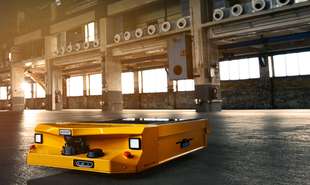
Continental is relying on Amazon Web Services (AWS) to develop new software solutions for autonomous mobile robots (AMRs). Continental's AMR solutions include robot hardware, an autonomy software stack, and AI-powered fleet management software.
Using AWS services, Continental aims to provide a cloud-based platform for managing mobile robots, offering customers in both intralogistics and agriculture the flexibility to adapt solutions to their specific industry requirements. By leveraging serverless computing, analytics, machine learning, and other advanced features of Amazon Web Services, such as the Internet of Things (IoT), Continental intends to enhance its technological infrastructure.
Continental collaborated with the AWS Prototyping and Cloud Engineering (PACE) team to develop the software stack for autonomous robots, accelerating development and implementing the first version of these software solutions. The collaboration between Continental and AWS, the company says, will enable customers to manage robot deployment more efficiently throughout their entire lifecycle.
“AWS’ innovation-focused services help us produce state-of-the-art mobile robots with high safety and reliability. The platform has already been successfully deployed in initial customer applications in the field of intralogistics”says Rahul Singh, Global Head of AMR Software at Continental.
 Photos: Continental
Adrian De Luca, Director of Cloud Acceleration for Asia, Pacific and Japan at AWS: “Our collaboration with Continental in a number of areas demonstrates that, through the power of the cloud and AWS’s deep industry knowledge, we can help our customers unlock the true potential of autonomous mobile robots.”
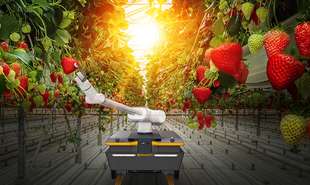
Continental's "Mobile Robots" belongs to the Automotive division of the technology provider. The intralogistics AMR is already being used successfully at automotive and intralogistics sites in Europe, Asia, and North America. The solution for agriculture will be available on the market at the end of 2024. It is based on a modular concept using a self-driving robot platform and is designed for use in controlled environments such as greenhouses. It can be equipped with various attachments from partners to autonomously perform tasks such as ultraviolet light treatment, selective harvesting, or 24/7 plant monitoring.