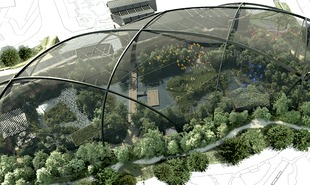
Preparations and construction of the new Pantanal aviary at Zurich Zoo are progressing, once again with considerable demands on construction site logistics and careful transport. The highlight: the future inhabitants will be equipped with a special type of access authorization.
Meanwhile, construction work on the new enclosure, using three cranes, is in full swing. Initially, the flamingos and other species had to be moved to make room. Now, the first phase of the new Pantanal Aviary is complete; the earthworks and preparatory work are largely finished. The actual construction of the aviary can now begin. Three new cranes, ranging in height from 32 to 49 meters, have been erected on the site. The finished Pantanal Aviary will be 35 meters high. The cranes give a sense of the aviary's sheer size.
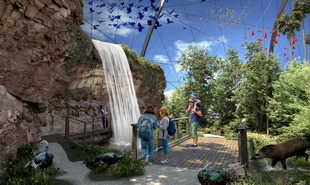
 Waterfall with tapir
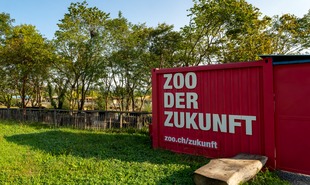
Seven months have passed since the initial demolition and construction work for the new Pantanal aviary began. Before work could commence, the area first had to be cleared. Some of the existing trees were preserved. Thirty particularly valuable and large trees were dug up and transported to a tree nursery in the lower part of the zoo. There, they are temporarily stored in special pots and will later be replanted in the new aviary.
Following the clearing, the demolition and excavation work commenced. Due to the zoo's location on the Zürichberg hill, the 11,000-square-meter area also had to be secured with shoring to prevent landslides. Meanwhile, the district heating and water lines have been laid, allowing work to begin on the visible construction of the new facility. Three cranes have been installed on the construction site. The two outer cranes are 32 and 34 meters high, respectively, while the middle one is 49 meters high. The different heights are necessary to prevent the cranes from interfering with each other during maneuvering.
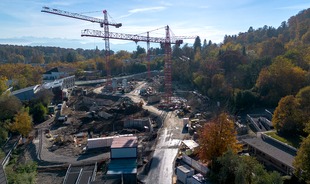 Up to 35 m high...
In the coming months, the foundations for the 35-meter-high steel structure will be built. Additionally, so-called micropiles will be driven into the ground at regular intervals. This ensures the stability of the aviary, which requires no supporting pillars. The entire load of the ten steel arches and the 13,500-square-meter mesh, with a total weight of approximately 1,400 tons, will later rest on the aviary's edge.
Only the tapir cannot fly.
The so-called Ara Hub will also be built by spring. The building was designed by the architectural firm L3P Architekten. The architects had to proceed cleverly. The Hub will house the indoor enclosures for the majority of the more than 14 different bird species in the aviary. To ensure that each species ends up in its designated enclosure, each bird's microchip is read upon entry, which then opens the correct passage. Each bird essentially carries its own key to its apartment in the multi-family building.
 Flamingos: Feet first...
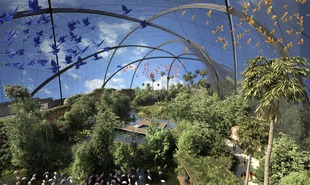
The building also houses the 800-cubic-meter retention basin for the facility's floodplain. Modeled after the original Pantanal wetlands in South America, the Pantanal Aviary also features a marsh landscape. This will be flooded at regular intervals. The water is filtered through a special system and can thus be reused. Over the past four years, various plants have been tested to ensure they can withstand the conditions in the aviary.
The cranes will be in use on the construction site until spring 2025. Following this, the erection of the steel arches for the aviary, which will be up to 124 meters long, will begin, meaning all major concrete work must be completed by then. One of the largest mobile cranes in Switzerland will be used to assemble the steel structure.
 All images: Zurich Zoo / Region Media Five / S. Schönbächler, N. Schnyder
Erecting the arches and installing the netting is expected to take approximately 1.5 years. The aviary should be fully completed by 2027. After completion, the interior finishing, landscaping, and the establishment period for all plants will follow. The Pantanal Aviary is scheduled to open in spring 2028.
For Zurich Zoo, the aviary represents another important milestone in its 2050 development plan. It will set new standards in many respects and unite all four main tasks of a modern, scientifically managed zoo: species and nature conservation, research, and education.
In the 35-meter-high aviary, various endangered bird species can move through the air in flocks. Similar to their natural habitat, the animals will live together in a social environment, fostering additional interactions and thus enriching their behavior.

The aviary is also designed to allow research to be conducted under controlled conditions, which would otherwise be impossible. This will allow for the acquisition of important insights, including into the mating and breeding behavior of parrots, for species conservation.
Not all birds can fly. But more than 15 endangered species, such as the anteater (which also isn't considered a "flight crew"), lowland tapir, red-tailed amazon parrot, and sun conure, will live together in the aviary. This allows the zoo to participate in the relevant European Endangered Species Programmes (EEP) and thus contribute to the protection of these species. The EEP for hyacinth macaws is coordinated by Zurich Zoo itself.
 Container: For tree transport only
The conservation organization "Instituto Arara Azul" in Brazil is the newest conservation partner of Zurich Zoo and is closely linked to the new aviary. The organization works on-site to protect the hyacinth macaws native to the Brazilian Pantanal, among other things by installing artificial nesting boxes and conducting close monitoring.
The video here