The so-called return on investment (ROI) isn't simply about profitability. It must also consider the ability to maintain operations even during labor shortages or seasonal peaks. In some industries, it's simply impossible to hire enough employees, says Riku Puska.
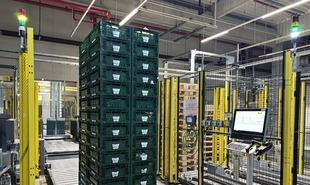
“The question isn’t: Can we afford automation?”said Cimcorp’s Warehouse & Distribution Industry Sales Manager. Rather, it should be: “Can we afford to do without it?” In many cases, automation is essential not only for maintaining efficiency but also for ensuring business continuity and customer loyalty.
Strategic investment
The cost of automation depends on many factors, such as warehouse size, processes, level of automation, and existing infrastructure. However, initial investment expenditures are only one aspect. A clear understanding of the ROI reveals a broader range of benefits: automation increases performance, reduces reliance on labor, improves picking accuracy, and enhances product quality through expanded quality control.
 M. Kumpulainen
In addition to these operational benefits, many companies also reported fewer order errors, lower return rates, and higher customer satisfaction: factors that are harder to quantify but equally crucial for business growth. These benefits directly impact the bottom line and, in the long run, strengthen brand power and market share.
“Cost reductions are important, but the real value lies in developing smarter, more resilient, and future-proof processes,” says Mikko Kumpulainen, Head of Sales for the Warehouse and Distribution Industry at Cimcorp. “Automation allows you to plan with confidence and reduces the daily effort associated with manual labor.”
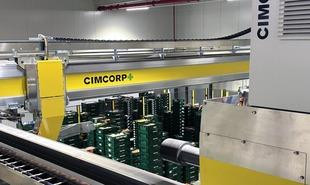 Photos: Cimcorp
“If you don’t have enough staff on peak days, you not only lose revenue, but you also lose customers to the competition,” emphasizes Riku Puska. “In this sense, automation isn’t just about ROI. Automation helps companies remain competitive and relevant.”
Depending on the project scope
Although the ROI varies, companies typically achieve a return within 4 to 14 years, depending on the project scope and strategic priorities.
 R. Puska
“A smaller system can be a sensible starting point,” says Mikko Kumpulainen, “especially if it is scalable. You get quick results and a long-term plan in one.”