Around 2,300 participants will attend the "BVL Supply Chain CX"which was renamed two years ago on Wednesday with an additional 120 exhibitors and partners , and will experience over 220 presentations until Friday. Logistics currently generates €335 billion in revenue in Germany.
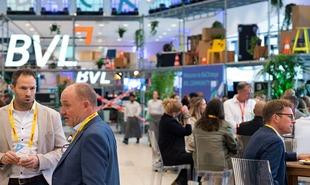 Relaxed atmosphere at the Estrel
Among the numerous top speakers in the Congress Area are Petra Scharner-Wolff, CEO of the Otto Group; Jens H. Lund, Group CEO of DSV; Major General Jochen Deuer, Commander of the Logistics Command of the German Armed Forces; Arthur Valdez, formerly of Amazon, Starbucks and Target; Ilse Henne, Member of the Executive Board of ThyssenKrupp AG and Deputy Chairwoman of the BVL; Achim Puchert, CEO of Mercedes-Benz Trucks; Nadine Despineux, Member of the Executive Board for Sales at Jungheinrich; Sebastian Peters, Chairman of the Board of Management at Airbus Operations; Prof. Dr.-Ing. Alice Kirchheim, Director of the Fraunhofer IML; and Ashwin Bhat, CEO of Lufthansa Cargo.

The traditional highlight is once again the presentation of the German Logistics Award on Wednesday evening, followed by a diverse networking night for congress attendees. All participants of the BVL Supply Chain CX will then meet on Thursday evening for the big CX party in the expo area.
Young Professionals
The event will once again focus particularly on networking, offering numerous options such as moderated connect tables, appointments for young professionals or the Ladies in Logistics, as well as a practical matchmaking function in the BVL Events app.
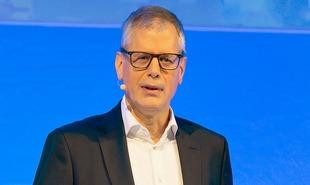 K. Althoff: Will things only start looking up again in 2026?
Kai Althoff, Chairman of the Board of the BVL and CEO of 4flow, presented the current state of logistics in Germany. The logistics sector remains the third largest economic sector after trade and the automotive industry, with an economic output of approximately €335 billion, which corresponds to about 8% of Germany's economic output and represents 25% of the European logistics market.
New Top 100 study
These figures for 2024 are found in the new Top 100 study, which published for the first time in November by Heilbronn University under Prof. Martin Schwemmer in cooperation with the German Transport Publishing House . According to the study, economic output increased nominally by 2.6% compared to 2023. Logistics employment declined by approximately 60,000 employees to 3.35 million in 2024 (-1.8 %).
 Photos: BVL / Herschelmann
Based on these figures, the logistics experts led by Prof. Christian Kille from the Würzburg-Schweinfurt University of Applied Sciences have prepared their autumn forecast, which is also being published today. Due to the uncertain environment, they calculated three scenarios – a best-case scenario, a trend scenario, and a worst-case scenario. In 2025, the economic output of the logistics sector would then nominally be between €337.7 and €338.7 billion, and between €344.8 and €349.5 billion in 2026 (assumed growth in 2025: +0.8 to +1.1%, in 2026: +2.1 to 3.2%). In real terms, however, this would result in a decline of between -0.5 and -0.8% in 2025 and a range of -0.4 to +1.1% in 2026.
No real trend reversal
The BVL Chairman: “In my view, the medium scenario of the logistics experts’ forecasts is the most likely. This means further stagnation in 2025 and only noticeable slight growth in 2026. This also corresponds with the results of our BVL Logistics Indicator, which we publish with the ifo Institute. Here we see a slight recovery at a very low level, but not yet a real turnaround in business expectations”.

The development of the logistics sector is in line with overall economic development in Germany. As the third largest economic sector, logistics remains of great importance to Germany and is an indicator of the overall economic situation.
Too little attention paid to it
At the BVL Supply Chain CX conference on Wednesday, the new study "Trends and Strategies in Logistics and Supply Chain Management" presented. According to the study, cybersecurity and digitalization remain top priorities for companies . Only 6% of the surveyed companies agree with the statement that the logistics and supply chain management sector is adequately represented by policymakers. 60 % disagree, and 34% are undecided.
Althoff: “As expected, the top priorities for companies are infrastructure, reducing bureaucracy, and digitalization. The energy transition, global trade, and the of skilled workers also continue to be seen as priorities”. He criticized the still half-hearted approach to electricity pricing and the limited number of concrete measures for the necessary migration of skilled workers. “Overall, the framework for the necessary measures has been established – now it is a matter of swift and consistent implementation.”
www.bvl.de